Teaching Functional Communication: Helping Children Express Their Needs Effectively
Communication is more than speaking—it is how children ask for help, express needs, build relationships, and navigate the world. In ABA therapy, one of the most powerful goals is to help children develop functional communication: the ability to express what they want, need, or feel in a clear, effective way.
At FreshStarts, we help families understand communication not as words—but as meaning.
Our philosophy:
When children can communicate functionally, frustration decreases, confidence grows, and independence expands.
What Is Functional Communication?
Functional communication is any form of communication used to achieve a specific need.
This includes:
- Words
- Gestures
- Pointing
- Picture Exchange (PECS)
- Signing
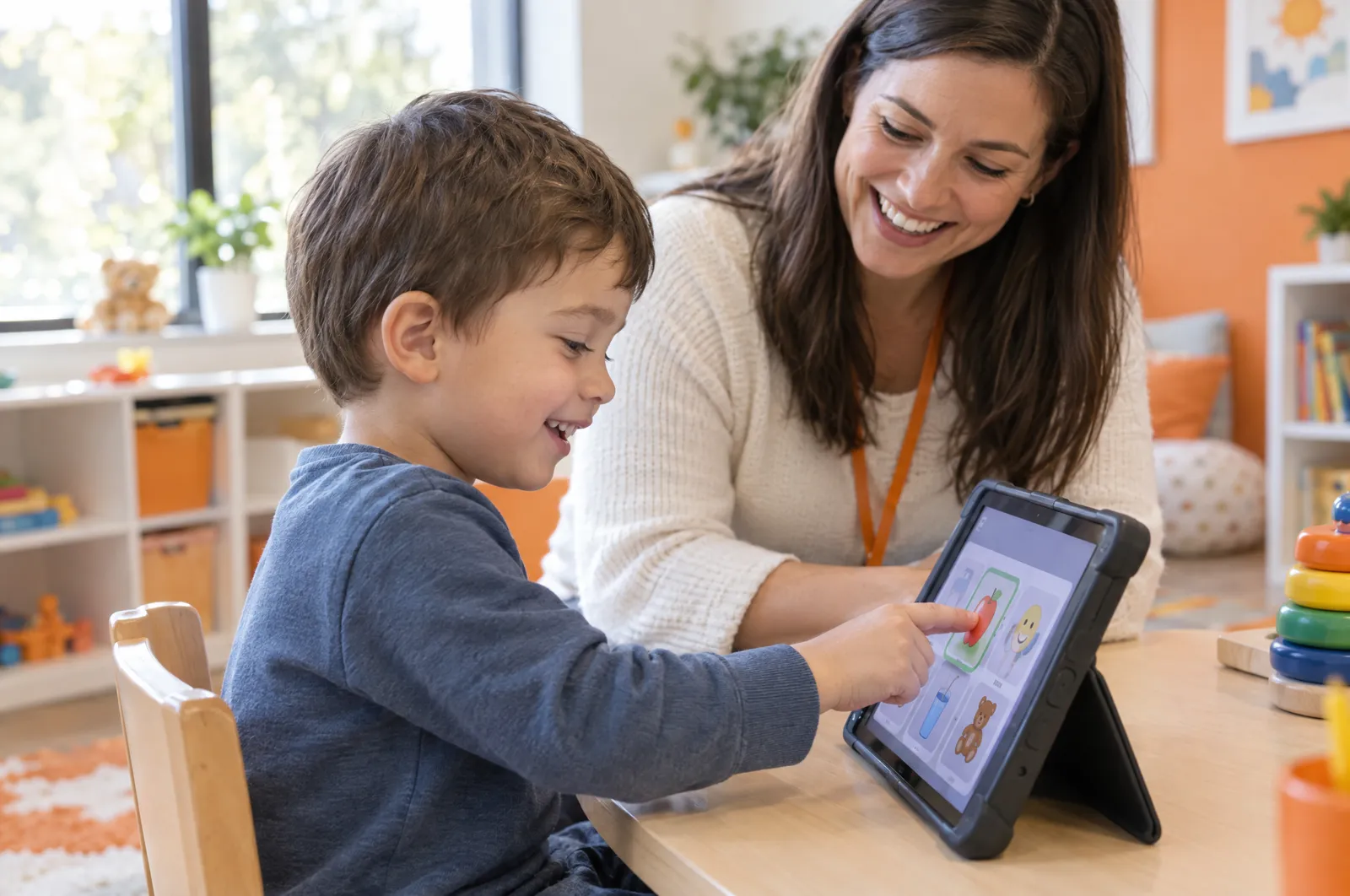
- AAC devices
- Adaptive communication systems
The goal is not “perfect speech.”
The goal is effective communication.
Why It Matters
Functional communication:
- Reduces challenging behavior
- Lowers frustration
- Increases social connection
- Supports learning
- Builds independence
Children thrive when they can express themselves in ways the world understands.
How ABA Teaches Functional Communication
At FreshStarts, we structure communication learning through:
• Mand training
Teaching children to request what they want.
• Modeling
Showing children how to communicate effectively.
• Prompting and fading
Supporting communication until it becomes independent.
• Reinforcement
Rewarding functional communication immediately.
• Generalization
Teaching communication across environments, people, and contexts.
Tips for Parents
- Encourage your child to communicate for everything, even small things.
- Reinforce immediately once they attempt communication.
- Offer choices (“juice or water?”)
- Avoid anticipating needs—give opportunities to communicate.
- Pair communication with natural reward (if they say “open,” open it).
The FreshStarts Approach
Every child deserves a voice.
We help families build functional communication as the foundation for learning, confidence, and social connection.