
Applied Behavior Analysis (ABA) therapy is most effective when it extends beyond the therapy session and into daily life. At FreshStarts, we believe that real growth happens not just during structured therapy—but in the hundreds of little moments that fill your child’s everyday routine.
As a parent or caregiver, you play a critical role in helping your child apply and generalize the skills they learn in ABA therapy. When therapy techniques are reinforced at home, school, and in the community, progress becomes stronger, faster, and longer-lasting.
In this blog, we’ll walk you through exactly how to support your child’s progress outside of sessions—and how to feel confident doing it.
Why Support Outside of Therapy Matters
Imagine your child is learning how to communicate their needs without a tantrum. In therapy, they might be taught to use a specific phrase, gesture, or communication tool. But what happens after the session ends?
If that same strategy is used at home—consistently, with encouragement and reinforcement—it becomes second nature. That’s the power of generalization in ABA.
ABA isn’t just about what happens during a 3-hour session. It’s about teaching life skills that work in the real world. And parents are the key to helping children make that leap.
When families are actively involved:
- Children progress faster and more consistently
- Skills transfer more easily into real-world situations
- Maladaptive behaviors are replaced more effectively
- Parents gain tools to handle challenges with confidence
As we like to say at FreshStarts:
“ABA doesn’t end at the therapy session—it grows in the moments between.”
Tip #1: Communicate Regularly with Your Therapy Team
The first step to supporting your child outside of therapy is knowing what they’re working on inside of it.
Ask your child’s therapist (typically an RBT or BCBA):
- What specific goals are we focusing on this week?
- What strategies or prompts are you using?
- What can I do at home to reinforce this?
Many ABA providers, including FreshStarts, offer regular parent updates, progress summaries, or even live observations so you can stay informed and involved. The more aligned you are with your child’s team, the more seamless the learning becomes.
Tip #2: Create Consistency Through Routines
Children with autism often thrive on structure. You can support therapy goals by building predictable, consistent routines that reinforce what’s being taught in sessions.
Example:
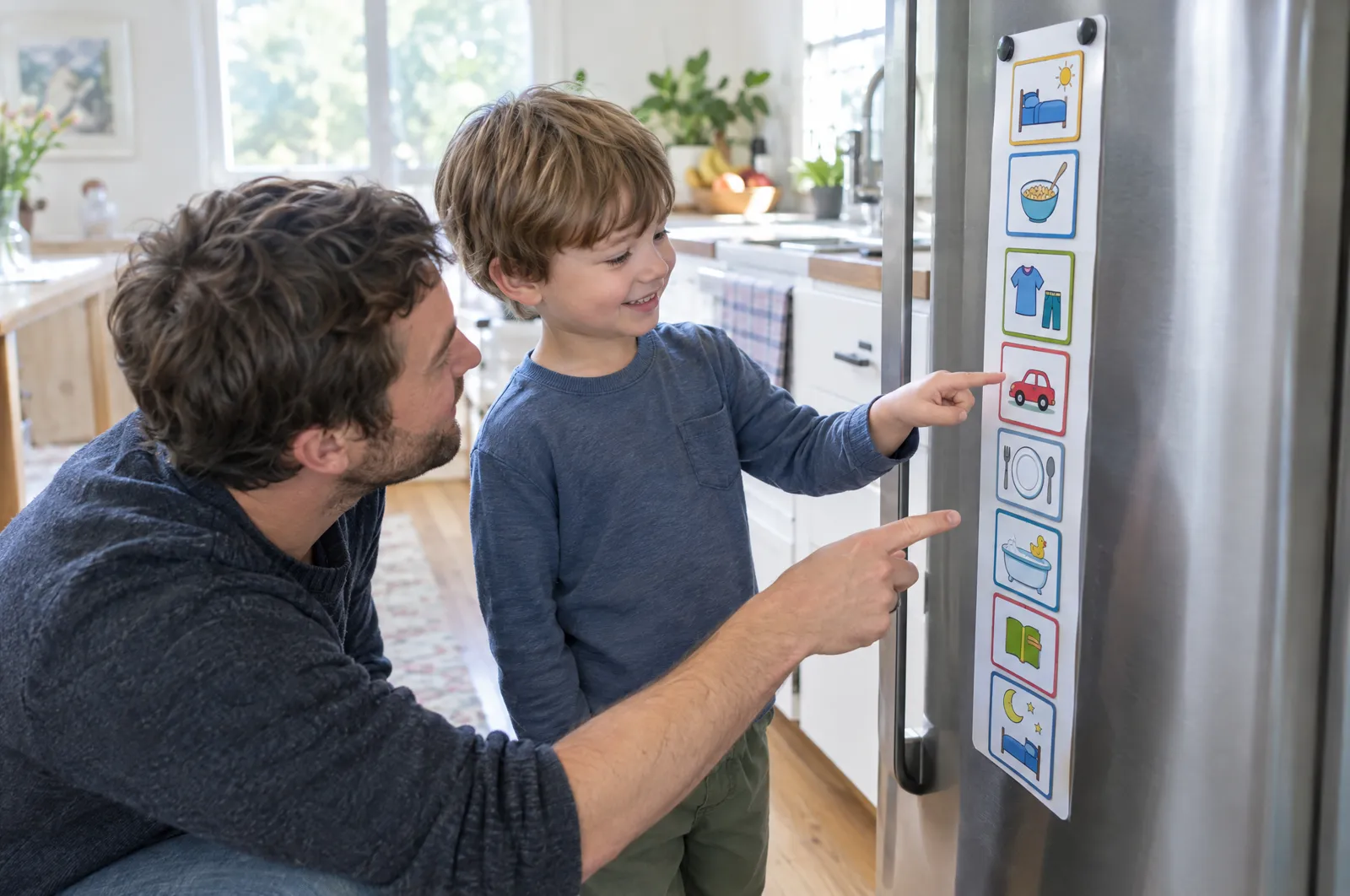
If your child is working on morning self-care (like brushing teeth or getting dressed), build a visual schedule at home with pictures or icons. Stick to the same order every day. Use the same language and positive reinforcement techniques the therapist uses.
This repetition creates a bridge between therapy and real life, and helps your child understand that the skill isn’t just for therapy—it’s for their everyday independence.
Tip #3: Reinforce Positive Behaviors Immediately
ABA therapy relies on reinforcement—rewarding a positive behavior so that it’s more likely to happen again. You can use this same technique at home.
Key tips for home reinforcement:
- Use specific praise (“Great job asking for help!”)
- Offer immediate rewards (stickers, play time, favorite snacks)
- Stay consistent—even if it takes multiple tries
- Keep rewards simple and meaningful to your child
Don’t worry about being perfect—just being aware of your child’s goals and celebrating their effort will make a huge difference.
Tip #4: Practice Skills in Natural Settings
Therapy sessions can’t cover every situation your child will face. That’s why natural environment teaching (NET) is so powerful.
Try integrating therapy goals into everyday life:
- Practice turn-taking while playing board games
- Encourage communication during grocery shopping
- Support daily living skills during meals and bedtime
- Roleplay social situations like saying “hello” or “thank you”
The more your child practices skills in different settings, the more confident and flexible they become.
FreshStarts often uses NET as part of our ABA programs. Sessions may take place in parks, stores, schools, or other everyday environments to build skills in the real world.
Tip #5: Ask for Parent Training
One of the most valuable services we offer at FreshStarts is Parent Training—where you learn the same tools and strategies used in therapy.
Parent training gives you:
- A deeper understanding of behavior
- Tools to respond calmly and effectively to challenges
- Confidence to carry therapy goals into daily routines
- Empowerment as your child’s most important teacher
Parent involvement is a central part of ABA and a key predictor of success. Don’t hesitate to ask your BCBA about training options.
Tip #6: Be Patient With the Process
Some skills take time to build. Others may show quick improvement, only to regress later due to stress, changes in routine, or developmental shifts.
This is normal.
Stay patient, lean on your therapy team, and remember: progress isn’t linear. What matters is showing up consistently and celebrating the small wins along the way.
If you ever feel stuck, reach out. We’re here to support you—not just during therapy hours, but throughout your parenting journey.
Real Progress Happens Together
ABA therapy is most effective when it becomes part of your family’s rhythm—not a separate event.
At FreshStarts, we partner with parents to create progress that lasts beyond the clinic walls. Whether you’re practicing communication at dinner, reinforcing routines in the morning, or roleplaying social interactions at bedtime—you’re helping your child build a more independent and fulfilling life.
Learn More & Take the First Step
📘 Discover our ABA approach: https://freshstartsnow.com/applied-behavior-analysis/ 👨👩👧 Access family tools and support: https://freshstartsnow.com/clients/ 📄 Understand insurance and payment options: https://freshstartsnow.com/insurance-coverage-payment/ 📅 Ready to begin? Schedule a consultation: https://freshstartsnow.com 📞 Prefer to call? We’re happy to answer your questions.